Donut Clipart Procreate Brush Stamp: A Practical Evaluation for Digital Artists
In the evolving landscape of digital illustration, efficiency and aesthetic consistency often dictate the workflow speed of professional designers and hobbyists alike. The Donut Clipart Procreate Brush Stamp represents a specific utility tool designed to streamline the creation of sweet-themed graphics within the Procreate ecosystem. Whether you are working on the expansive canvas of an iPad or the compact screen of an iPhone using Procreate Pocket, this resource offers a distinct approach to incorporating detailed imagery without the time investment of manual drawing. This evaluation explores the mechanics, advantages, and limitations of this brush stamp compared to traditional drawing methods and alternative asset formats.
Understanding the Mechanics of the Donut Clipart Procreate Brush Stamp
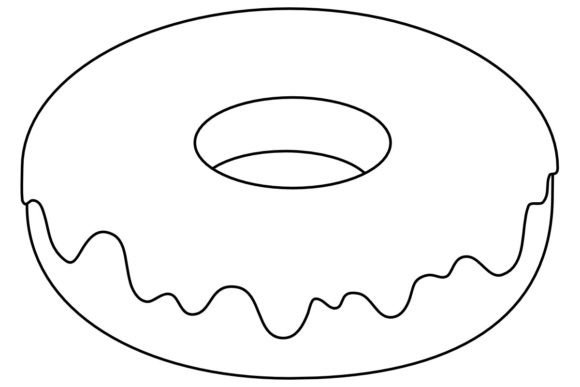
The core function of a Donut Clipart Procreate Brush Stamp is to act as a pre-rendered image embedded directly into the brush engine of the application. Unlike standard brushes that rely on texture maps or dynamic stroke generation, a stamp brush places a complete, high-resolution graphic onto the canvas with a single tap or drag. Specifically, the Cute clipart cartoon style iced donut Procreate brush stamp focuses on a specific visual niche: whimsical, brightly colored pastries often featuring sprinkles, glaze, and playful expressions.
This functionality transforms the creative process from a constructive task—building shapes, coloring layers, and adding shading—to a compositional one. When a user selects this brush, they are essentially accessing a library of finished assets that can be deployed instantly. For artists utilizing the Procreate app on iPad, the pressure sensitivity allows for subtle variations in opacity or size, though the fundamental shape remains consistent. On Procreate Pocket for iPhone, where screen real estate is limited, the ability to place complex elements like an iced donut with a single gesture significantly reduces the friction of navigation and tool switching.
What makes this specific brush distinct is its dual nature as both a tool and an asset. It bypasses the need for external file imports while maintaining the flexibility of being part of the native brush set. Users can apply the stamp once for a focal point or multiple times per design to create patterns, backgrounds, or character accessories. This versatility is particularly valuable for projects requiring repetitive elements, such as packaging design, social media templates, or children's book illustrations.
Comparing Stamp Brushes to Traditional Drawing Methods
When evaluating whether to use a Donut Clipart Procreate Brush Stamp, it is essential to compare it against the traditional method of drawing the subject from scratch. Manual illustration offers unparalleled customization. An artist drawing a donut from zero can alter every curve, adjust the lighting to match a specific scene, and integrate the object seamlessly into the perspective of the artwork. However, this approach demands significant time and technical skill. Creating a cohesive cartoon style requires a steady hand and a deep understanding of form and color theory.
In contrast, the stamp brush prioritizes speed and consistency. If a project requires twenty identical donuts scattered across a page, drawing each one individually introduces the risk of slight variations that may look unintentional. The Donut Clipart Procreate Brush Stamp ensures that every instance is pixel-perfectly identical, which is crucial for pattern design and branding. The tradeoff here is rigidity; the asset cannot be easily deformed or reshaped without breaking the integrity of the stamp. While Procreate offers transformation tools like Liquify or Warp, these are best suited for minor adjustments rather than fundamental structural changes.
For professionals working under tight deadlines, the time saved by using a stamp brush can be substantial. Instead of spending thirty minutes rendering a single detailed pastry, the artist can place it in seconds and move on to composition and layout. This shift allows the creator to focus their energy on higher-level design decisions rather than getting bogged down in the minutiae of rendering individual objects.
Alternative Formats and Their Relative Merits
Beyond the choice between drawing and stamping, there are other formats for acquiring digital assets, such as PNG files, vector SVGs, or layered PSD files. Each format presents different strengths and weaknesses when compared to the Donut Clipart Procreate Brush Stamp.
- PNG Files: These are static images that must be imported into Procreate via the "Add Image" feature. While they offer high quality, the workflow is interruptive. The artist must exit the current layer or navigate menus to import the file. Once imported, the PNG becomes a rasterized element that can be transformed but lacks the immediate accessibility of a brush. The stamp brush eliminates this menu navigation, keeping the hands on the canvas.
- Vector Assets (SVG): Vectors are scalable without loss of quality, making them ideal for print work. However, Procreate is primarily a raster-based application. Importing vectors often requires flattening or converting them to pixels, which negates some of the benefits of the vector format unless used in conjunction with other software. The stamp brush is optimized for the raster environment of Procreate, ensuring immediate compatibility.
- Layered PSD Files: These allow for editing individual components, such as separating the frosting from the dough. While highly flexible, managing multiple layers can clutter the workspace and slow down the process. A stamp brush consolidates these elements into a single, ready-to-use action, trading editability for workflow velocity.
The decision often comes down to the specific requirements of the project. If the final output requires the donut to be resized to billboard dimensions without any pixelation, a vector source might be superior. However, for most digital illustrations, web graphics, and mobile-first designs, the resolution of the Cute clipart cartoon style iced donut Procreate brush stamp is typically sufficient and far more efficient to deploy.
Strengths and Tradeoffs of the Stamp Approach
The primary strength of the Donut Clipart Procreate Brush Stamp lies in its ability to democratize complex illustration. It allows users with varying skill levels to produce professional-looking results quickly. For those who struggle with organic shapes or color blending, the pre-made asset provides a reliable foundation. Additionally, the consistency offered by the stamp is invaluable for creating cohesive visual identities. A brand using these donuts across various platforms will maintain a uniform look that is difficult to achieve through manual redrawing.
However, there are inherent tradeoffs. The most significant limitation is the lack of unique variation. Overusing the same stamp can lead to a "sticker-like" appearance, where elements feel pasted on rather than integrated into the scene. To mitigate this, skilled artists often combine the stamp with manual touches. They might add custom shadows, highlights, or texture overlays to blend the stamp into the background. Another limitation is the fixed style; if the project requires a realistic or minimalist aesthetic, a cartoon-style iced donut stamp will not fit without significant alteration.
Determining the Best-Fit Situations
Deciding when to utilize the Donut Clipart Procreate Brush Stamp depends heavily on the project goals and constraints. This tool is the right choice when:
- Speed is a priority: Deadlines are tight, and the client needs a draft or final product quickly.
- Consistency is required: The design involves repeating elements, such as patterns, borders, or background fills.
- Mobile workflow is necessary: Using Procreate Pocket on an iPhone makes detailed drawing cumbersome; stamps allow for rapid iteration on smaller screens.
- The style matches the vision: The project calls for a cute, cartoonish, or whimsical aesthetic that aligns with the pre-made asset.
Conversely, readers may need to consider another option when:
- Unique customization is essential: The donut needs to be twisted, melted, or interacted with by characters in a way that breaks the static nature of the stamp.
- High-end realism is the goal: Photorealistic projects require textures and lighting that go beyond the capabilities of a stylized clipart stamp.
- Scalability is critical: The final output will be printed at massive sizes where the resolution of the stamp might become apparent.
Practical Application in Design Workflows
Integrating the Donut Clipart Procreate Brush Stamp into a workflow does not mean abandoning artistic control. Many experienced designers use these stamps as building blocks. For example, an artist designing a bakery logo might use the stamp to quickly explore several compositions. By placing the iced donut in different positions and scaling it up and down, they can determine the most balanced layout before committing to final refinements.
Once the composition is set, the artist can switch to standard brushes to add depth. They might paint a shadow beneath the stamped donut to ground it in the scene or add a subtle grain texture over the entire image to unify the elements. This hybrid approach leverages the efficiency of the stamp while retaining the polish of hand-drawn art. It is also effective for creating storyboards or concept art, where the focus is on communication rather than final rendering. In these scenarios, the ability to place a recognizable object instantly helps convey the idea to clients or team members without unnecessary delay.
Ultimately, the value of the Donut Clipart Procreate Brush Stamp is not just in the image itself, but in the freedom it grants the artist to focus on creativity rather than repetition. By removing the tedium of drawing identical objects, it opens up space for experimentation with color, layout, and narrative. Whether used as a standalone element or as part of a larger, mixed-media piece, this tool serves as a practical solution for modern digital illustrators navigating the balance between speed and quality.